
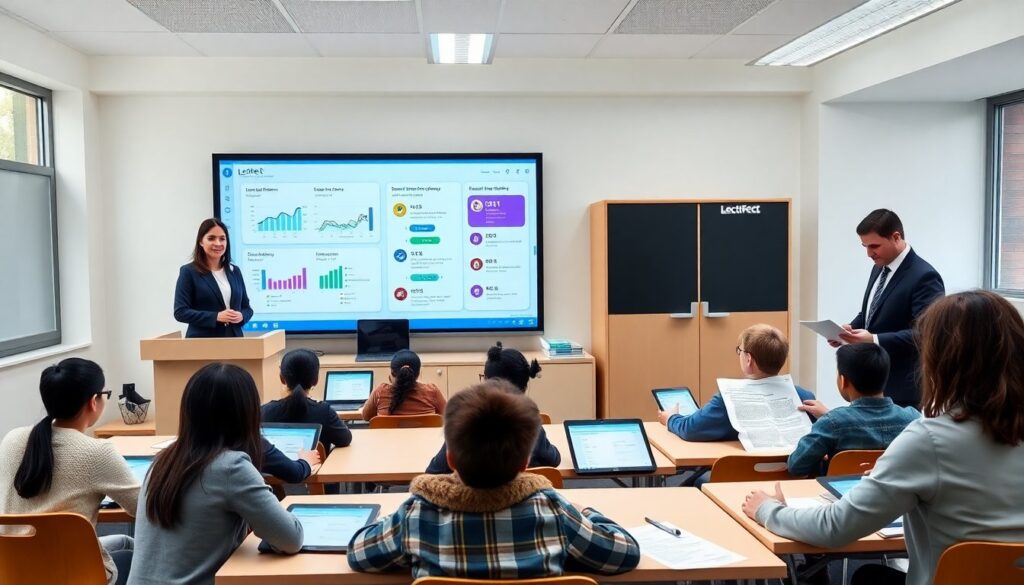
Lectfect the power of educational technology appears in many school plans in 2026. Lectfect offers AI tools that help teachers, students, and admins. It saves time and improves learning. It adapts content to student needs. It gives teachers clear data on progress. Schools test it to raise engagement and outcomes.
Key Takeaways
- Lectfect enhancing education provides AI-powered tools that personalize learning and automate grading to save teacher time and improve student outcomes.
- The platform supports varied educational settings including K–12, higher education, remote learning, special education, and career technical training with tailored features.
- Schools implement Lectfect through phased pilots, comprehensive teacher training, and strong privacy protections to ensure safe and effective use.
- Data-driven insights from Lectfect help educators track progress, identify learning gaps, and adjust instruction to boost student engagement and mastery.
- Cost-benefit analyses guide districts in scaling Lectfect based on license fees, training investments, and measurable improvements in learning.
- Lectfect enhancing education complements teacher expertise by providing actionable reports and suggestions while leaving final decisions to educators.
What Lectfect Is And Why It Matters For Modern Classrooms
Lectfect is a suite of AI tools that supports teaching and learning. Lectfect enhancing education uses models that create lessons, suggest assessments, and summarize student work. It provides personalized practice that matches each student’s level. It flags gaps in understanding and suggests small steps to fill them.
Schools adopt lectfect enhancing education to reduce teacher workload. The tools automate grading for common tasks and draft feedback for open responses. They free teachers to focus on coaching and on social skills. Administrators use lectfect enhancing education to track program-level trends. The platform compiles data into clear charts and into simple reports.
Teachers use lectfect enhancing education to create differentiated lesson plans. They assign varied tasks to students with simple clicks. The platform recommends resources that match learning goals and state standards. Students receive practice that matches skill level and pace. The system repeats weak items more often and reduces repetition on mastered items.
Curriculum teams use lectfect enhancing education to align materials across grades. They test new units with pilot groups and measure changes in comprehension. Districts use the tools to compare outcomes across schools while keeping student privacy. The result is faster cycles of improvement and more consistent instruction.
Practical Classroom Use Cases — K‑12, Higher Ed, And Remote Learning
K‑12 teachers use lectfect enhancing education for reading and math practice. The tool generates leveled passages and step-by-step math problems. It creates short formative checks that teachers give weekly. It produces hints that students read when they get stuck. Teachers report better engagement and clearer next steps for each student.
Higher ed instructors use lectfect enhancing education to design active learning sessions. The platform summarizes journal articles and offers discussion prompts. It creates quiz banks and draft rubrics for writing assignments. Faculty use lectfect enhancing education to scale feedback across large classes. Graduate students use it to draft literature reviews and to map citations.
Remote learning programs use lectfect enhancing education to keep students on track. The system schedules micro-lessons and sends progress notes to families. It adapts to low-bandwidth settings by offering text-first activities and by caching media. Remote tutors use lectfect enhancing education to prepare scaffolded sessions that match student responses.
Special education teams use lectfect enhancing education to set clear IEP goals. The platform breaks goals into measurable steps and suggests practice sequences. It tracks mastery on each step and exports progress notes that educators can share with families. Speech therapists use the speech modules to generate practice prompts adjusted to each child’s needs.
Career and technical programs use lectfect enhancing education to model workplace tasks. The tool simulates scenarios and checks applied skills. Apprentices use step-by-step guidance to practice tasks safely. Instructors get objective measures of skill growth and of task accuracy.
Deployment, Teacher Training, Privacy Considerations, And Measuring Impact
Deployment plans start with a small pilot. Districts choose a few classrooms and run lectfect enhancing education for one term. They collect teacher feedback and student outcome data. They scale the rollout in phases to limit risk. IT teams set account controls and access levels before the pilot.
Teacher training focuses on simple tasks first. Trainers show how lectfect enhancing education creates lessons and how it scores student work. They coach teachers on reading platform reports and on using suggestions from the tool. Training includes short practice sessions and follow-up office hours. Coaches meet regularly to solve problems and to share examples of effective use.
Privacy teams review data flows and storage. They ensure student data stays within approved cloud zones. They apply role-based permissions so only authorized staff see sensitive records. Vendors of lectfect enhancing education sign data protection agreements. Schools use local policies to control retention and to allow data deletion when needed.
Measurement uses clear indicators. Schools track attendance, formative scores, and rates of mastery on standards. They compare growth for students who used lectfect enhancing education with similar peers. They run short-cycle studies that last one term and longer studies that last a year. They publish findings to staff and to families in plain language.
Cost analysis examines subscription fees and training time. District leaders count license costs, teacher hours for training, and IT setup time. They compare those costs to saved grading time and to gains in student outcomes. Leaders adjust scale based on cost per improved outcome. The approach yields evidence that informs future purchases.
Ongoing support comes from vendor help desks and from internal teacher leaders. Schools keep a small budget for updates and for extra training when needed. They treat lectfect enhancing education as a tool that supports teacher expertise rather than replaces it. Teachers keep final judgment on content and on grading decisions.