

Key Highlights
- Recognition of prior learning (RPL) allows you to get a formal qualification using your existing work experience.
- Eligible experience includes full-time, part-time, volunteer, and self-employed work.
- Your skills are assessed against the units of competency required for a vocational education qualification.
- Successful RPL can lead to credit transfer, reducing your study time and costs.
- The process involves gathering evidence of your skills to prove your competency.
- Even military service and informal on-the-job training can count toward your qualification.
Introduction
Have you ever wondered if your years of on-the-job experience could count toward a formal qualification? The great news is that it can, through a process called recognition of prior learning (RPL). This pathway is designed to validate the skills and knowledge you’ve already gained outside a traditional classroom. Understanding your eligibility is the first step toward fast-tracking your way to a nationally recognised qualification. This guide will explore exactly which types of work experience can help you achieve your career goals sooner.
Eligible Work Experience for RPL with Skills Certified
Anyone in Australia with relevant work experience can apply for recognition of prior learning. The key is that your experience, whether paid or unpaid, must align with the skills needed for a specific vocational education qualification. Your competency is what matters most, not how you acquired it.
Skills Certified recognises a wide range of professional histories. As long as you can demonstrate that your skills match the requirements of the qualification you’re seeking, you may be eligible. Below, we explore the different types of work that can be considered for your RPL application.
1. Full-Time Paid Employment in Your Field
Your full-time employment is one of the most direct sources for demonstrating your skills and competency. If you have been working in a role that directly relates to the qualification you are pursuing, you have likely developed the exact abilities that an RPL assessment looks for. This consistent, hands-on experience provides strong evidence of your capabilities.
The duties and responsibilities of your day-to-day job are powerful proof. An assessor will look at how your professional activities align with the units of competency within your desired qualification. It’s about showing that you already perform the tasks that the course teaches.
To support your claim, you can provide documents from your employment that highlight your skills, such as:
- Job descriptions outlining your duties
- Performance reviews from your manager
- A detailed resume showing a minimum of two years of relevant experience
2. Part-Time or Casual Work with Relevant Duties
Don’t underestimate the value of your part-time or casual work experience. Even if you weren’t working full-time, the duties you performed can still be highly relevant for an RPL assessment. The focus is on the quality and relevance of your tasks, not the number of hours you worked each week. Your competency can be just as strong as that of a full-time employee.
When you apply, an assessor will examine your responsibilities to see how they match the required units of competency. For example, if you worked casually in a kitchen, your experience with food safety and preparation could count toward a hospitality qualification. It’s all about connecting your duties to the formal training outcomes.
Evidence from part-time or casual roles can include:
- Statements from supervisors verifying your duties and skills
- Examples of projects or tasks you completed in your role
3. Volunteer Roles Demonstrating Industry Skills
Volunteer work is a valuable and often overlooked source of relevant work experience. Many people develop significant industry skills while giving back to their communities. If your volunteer role involved tasks and responsibilities that align with a formal qualification, it absolutely counts. Your demonstrated competency is what matters.
Just like with paid employment, you will need to provide evidence of the skills you gained. Think about the projects you managed, the teams you led, or the technical tasks you performed. This experience can be just as valid as paid work in demonstrating your abilities to an assessor.
To prove your skills from a volunteer position, you could gather:
- A letter from the organisation detailing your role and responsibilities
- Photos, videos, or other materials showcasing your work in action
4. Self-Employment and Freelance Projects
Are you self-employed or a freelancer? Your entrepreneurial journey is a rich source of experience for RPL. Running your own business requires a broad range of skills, from project management and client communication to the specific trade skills of your industry. This experience is highly valuable when seeking a formal qualification.
The key challenge for self-employment is providing clear evidence, since you don’t have a traditional supervisor. You need to be meticulous in documenting your work and its outcomes. Your portfolio of completed projects, client testimonials, and business records can all serve as powerful proof of your abilities.
Strong evidence from self-employment can include:
- Contracts, invoices, and project plans that detail the scope of your work
- Testimonials or references from satisfied clients
5. Internships and Work Placements
Internships and structured work placements are excellent forms of work experience for an RPL application. These opportunities are specifically designed to help you build practical skills in a professional environment. Because they are often part of a learning program, the experience gained is directly tied to industry standards and competencies.
The tasks you completed during your internship can provide strong supporting evidence for your RPL claim. An assessor will look at your responsibilities and the projects you contributed to, matching them against the required units of competency for your desired qualification. This shows you have already applied your knowledge in a real-world setting.
You can use the following to demonstrate your internship experience:
- A letter from your host employer confirming your placement and duties
- A logbook or portfolio of the work you completed during the internship
6. Military Service with Transferable Skills
Experience gained during military service is often highly transferable to civilian qualifications. The defence forces provide extensive training in areas like leadership, logistics, engineering, and communication. These transferable skills are highly regarded in many industries and can be recognised through an RPL assessment.
Your military career can be a significant asset in your pursuit of a new qualification. An assessor can help you identify how the competencies you developed in service align with the requirements of a civilian trade or profession. It’s a matter of translating your unique experience into a nationally recognised framework.
To support your RPL application with military experience, you can provide:
- Service records that outline your roles, training, and responsibilities
- Certificates of attainment for any courses completed during your service
7. Informal Learning and On-the-Job Training
Not all learning happens in a classroom. Informal learning, such as on-the-job training or skills you’ve taught yourself, is another valid pathway to a qualification. If you can prove that you have mastered the skills required for a job, it doesn’t matter how you learned them. This is the core principle of RPL.
Think about the times a senior colleague showed you how to use a new piece of software, or when you completed an online tutorial to solve a problem. This type of on-the-job training directly contributes to your professional growth and can be mapped to relevant units of competency.
Evidence for informal learning can be creative and may include:
- A portfolio of work demonstrating the skills you’ve acquired
- A statutory declaration outlining your experience
- A practical skills demonstration for an assessor
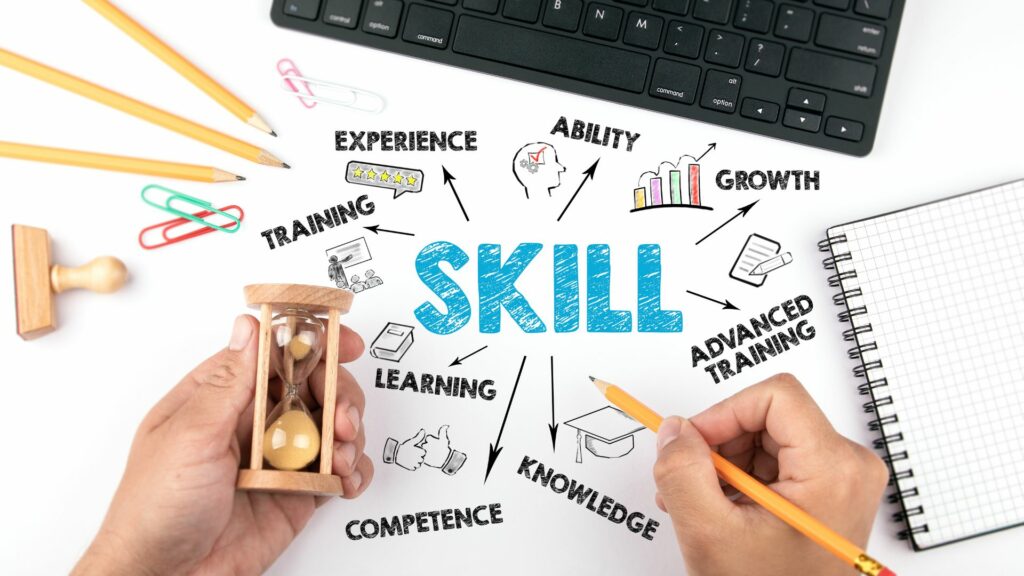
Key Criteria for Recognition of Prior Learning Assessment
Recognition of prior learning works by assessing your existing competency against the standards of a formal qualification. The RPL assessment is more than just listing your past jobs; it’s about providing high-quality evidence that proves your skills. The process is guided by the Principles of Assessment—fairness, flexibility, validity, and reliability—to ensure every decision is consistent and credible.
To be successful, your evidence must also meet the Rules of Evidence. This ensures that what you submit is authentic, current, and directly related to the skills being assessed. The following sections explain how to demonstrate your competence and match it to a qualification.
Demonstrating Evidence of Skills and Competence
Proving your competency is about providing relevant evidence that is valid, sufficient, authentic, and current. These are known as the Rules of Evidence. Validity means your evidence must directly relate to the skills in question. Sufficiency means you need to provide enough evidence to cover all aspects of the competency.
Authenticity confirms the work is your own, while currency ensures your skills and knowledge reflect current industry standards. An assessor will review your supporting evidence against these rules to make a fair judgment. Simply submitting a large volume of documents is not enough; the quality and relevance of your evidence are what truly matter.
Examples of documents you might submit include:
- Work samples, portfolios, or project reports
- Photos and videos of you performing tasks
- References or testimonials from supervisors
Matching Experience to Nationally Recognised Qualifications
Yes, RPL is a key pathway to obtaining nationally recognised qualifications. The process starts with a self-assessment and an initial inquiry with a provider like TAFE or Skills Certified. An assessor then helps you match your experience to the specific units of competency within your desired qualification. This mapping process is crucial for a successful outcome.
The assessor carefully analyses an applicant’s evidence to see where it aligns with the course requirements. If your experience covers all aspects of a particular unit, you can receive credit transfer for it. This means you won’t have to study or be assessed on that unit again.
Required Documents for RPL Application in Australia
Starting your RPL journey involves submitting an application form to your chosen training provider. Along with the form, you will need to supply clear documentation that supports your claim. An assessor will review all your submitted files to get a comprehensive picture of your skills and experience.
The goal is to provide a variety of documentation that leaves no doubt about your abilities. The more organised and relevant your evidence is, the smoother the assessment process will be. Let’s look at two key types of documents you will need to prepare for your application.
Employment Records and References
Official employment records are a cornerstone of your RPL application. This documentation provides formal proof of your work history, roles, and responsibilities. These records help an assessor verify the context and duration of your experience, adding significant weight to your claim. They are a form of supporting evidence that is straightforward and highly credible.
References from supervisors or managers are also incredibly valuable. A letter or report from someone who has overseen your work can confirm your skills and contributions in a professional context. This third-party verification is an excellent way to strengthen your application and prove the authenticity of your experience.
Key employment documentation includes:
- A current resume with contact details for your managers
- Official job descriptions
- Performance appraisals or reviews
Portfolio of Work Samples and Achievements
A portfolio of your work samples is your chance to visually demonstrate your relevant skills. Unlike a resume, which lists your experience, a portfolio shows it. This collection of your best work provides direct evidence of your capabilities and is one of the most powerful tools in an RPL application. It helps an assessor see the quality of your work firsthand.
Your portfolio should be tailored to the qualification you are seeking. Select work samples that directly align with the competencies required. Whether it’s a marketing plan you developed, a website you coded, or photos of a construction project you managed, each piece should tell a story about your abilities.
A strong portfolio might contain:
- Reports, presentations, or publications you have created
- Photographs, videos, or other artefacts that showcase your skills in action
Closing Remarks
In conclusion, understanding the eligibility criteria for Recognition of Prior Learning (RPL) with Skills Certified is crucial for anyone looking to leverage their work experience toward achieving qualifications. From full-time employment to volunteer roles, various experiences can pave the way for recognition. It’s essential to demonstrate the right skills and provide supporting documentation to enhance your RPL application. By aligning your experience with nationally recognised qualifications, you can streamline your path to success. Take the time to assess your work history and prepare a strong application that showcases your competencies. If you’re ready to take the next step, don’t hesitate to reach out for further assistance!
Frequently Asked Questions
Can RPL help reduce my study time and qualification costs?
Absolutely. The primary benefit of RPL is that it reduces your study time by granting you credit transfer for units you already know. This means you only need to study the remaining units to complete your qualification, which can also lower the overall cost depending on the fee structure of the course.
What types of skills and experience are most likely to be accepted for RPL?
The most accepted skills are those that directly match the relevant units of competency within the qualification you are pursuing. Whether gained from work, prior study, or life experience, your evidence must clearly demonstrate your competency in the specific areas outlined by the training package.
How long does the RPL application process usually take in Australia?
The timeline for an RPL application varies. It depends on the complexity of the qualification, how quickly you provide the required documentation, and the training provider’s assessment process. A well-prepared application form with clear evidence will help the assessor complete the process more efficiently.